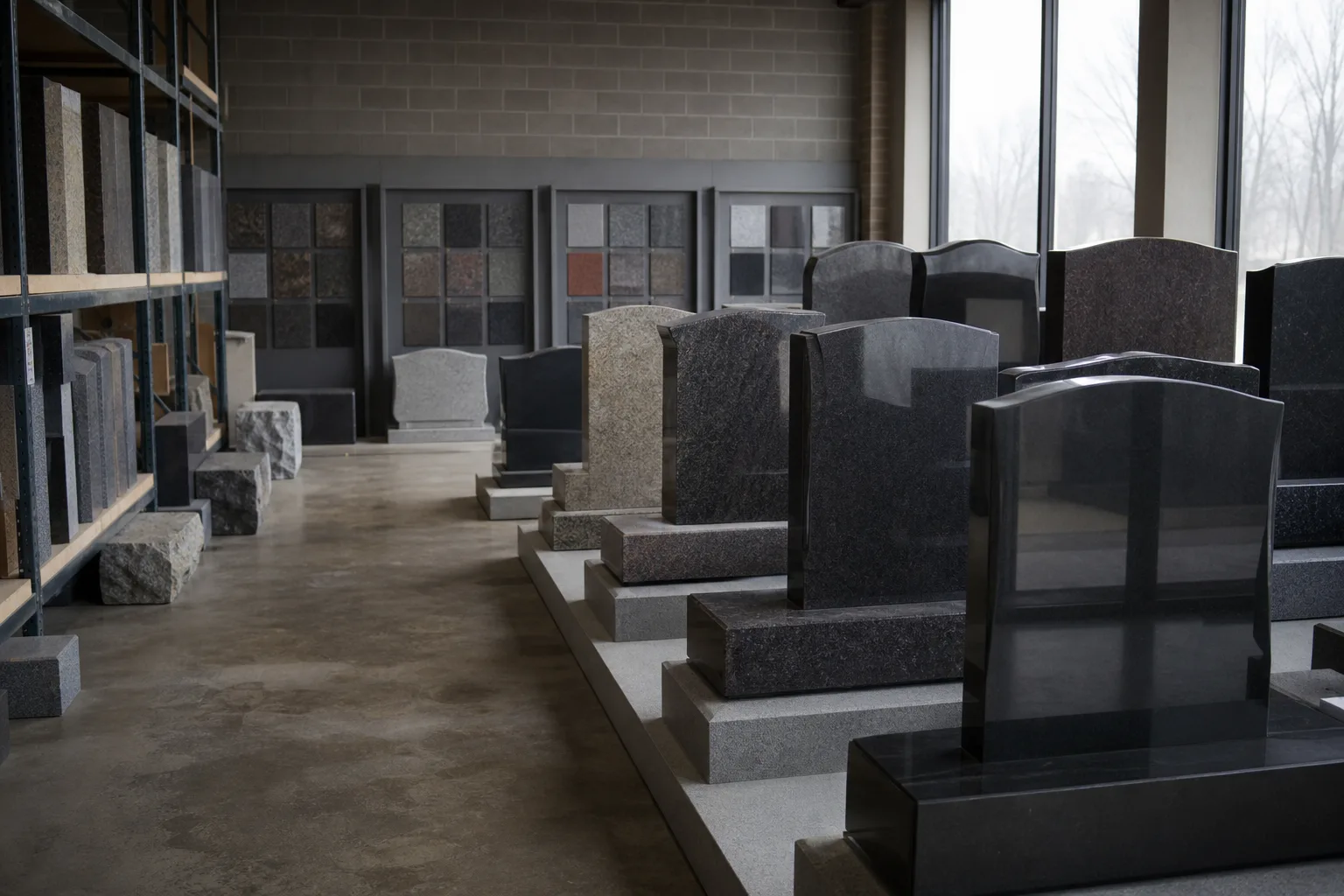
A walk through the permissions, the foundation work, the quotes and the lettering choices behind a single cemetery memorial, written down so the next person can skip the guesswork.
Two estimates for what looks like the same granite marker can differ by a factor that seems impossible until the pages are laid side by side. The stone is the same color, the dimensions match, and yet one total runs well past the other. Almost always the gap sits in items a casual reader skims: the finish on the sides, the number of letters included before a per-character charge begins, whether the foundation is quoted or merely mentioned, and which of the cemetery's own fees the mason has folded in. A careful reader takes the estimate apart before comparing anything.
The stone line, and what the price is actually measuring
The first line is usually the raw memorial: quarry, color, dimensions, and finish. Two quotes naming the same color can still be pricing different material, because granite color names describe an appearance rather than a single source, and imported and domestic blocks of similar hue differ in cost. Finish matters more than most buyers expect. A stone polished on two sides costs less than one polished on all four, and a rock-pitched or sawn edge changes the figure again. Ask which surfaces are polished, what the finished dimensions are after shaping, and whether the base is included or billed separately.
Carving and lettering, counted character by character
Cutting is priced by labor and method, and this is where masons genuinely differ. Sandblasted lettering through a rubber stencil is the standard, and shops usually include a set allowance of characters, often enough for a name, two dates and a short line, before charging per additional character. Hand-cut work, V-sunk letters, raised letters, laser etching and carved ornament each carry their own rate. Spaces and punctuation may or may not count. A careful reader asks for the included character allowance in writing, the per-character rate beyond it, and whether a portrait, emblem or vase is quoted separately.
Foundation, delivery and setting, where estimates quietly diverge
Below the stone sits a poured concrete foundation, and cemeteries almost always dictate its depth, footprint and reinforcement. Some cemeteries pour it themselves and bill the family directly, at a rate the mason cannot influence. Others allow the monument company to pour it, in which case the price is competitive and negotiable. Delivery and setting cover the crane or boom truck, the crew and the time on site, and distance drives that number. Read whether the estimate includes setting, or stops at delivery to the gate, because the difference is real money and occasional confusion.
The cemetery's own fees, which no mason controls
Separate the lines the monument company sets from the ones it merely passes through. A memorial permit or installation fee, a foundation charge, an inspection, a required setting appointment and sometimes a per-visit charge for the contractor to enter the grounds are all set by the cemetery in its rules and price schedule, and they are identical no matter which mason you hire. The Federal Trade Commission oversees consumer protection in funeral goods and services, and the practical consequence for a buyer is straightforward: itemized pricing lets you compare shops honestly. Request the cemetery's fee schedule directly and check it against every quote.
Later inscriptions, priced now rather than later
On a companion monument, the second date is cut years afterward, on site, by a letter cutter working under a portable tent. That job carries its own economics: a trip charge, a minimum, a per-character rate, sometimes a cemetery entry fee, and a possible charge for cleaning or resetting the stone if it has settled. Very few shops will guarantee a price a decade out, but many will state today's rate and their trip minimum, which gives the family a defensible expectation. Ask for it, and keep the estimate with the deed and the cemetery's rules.
Once the lines are sorted into two columns, one the mason's and one the cemetery's, comparison becomes simple arithmetic rather than guesswork. Ask each shop to quote the same stone, the same finish, the same character count and the same setting scope, and to list the cemetery's fees as pass-through amounts. The remaining spread is the actual difference between the two businesses, and it is usually explainable: shop overhead, crew size, distance to the grounds, and how much finishing work happens in house.